Hello, friends! I’m going through some major life changes right now, which leaves me precious little time for writing. And yet, me being the person that I am, I must write something! So for the next few weeks, I’m just going to write some quick and easy posts sharing my #1 favorite facts about each planet of the Solar System. Today, we’re starting with my #1 favorite fact about Mercury.
Finding water in space isn’t actually a big deal. Water molecules are the simplest possible combination of hydrogen and oxygen, the first and third most common elements in the universe, respectively. So we should expect to find water (in ice form, at least) all over the place. And we do find it all over the place! Many moons of the outer Solar System are covered in ice. The rings of Saturn are mostly made of ice, and comets are famously described as “dirty snowballs” due to how much ice they contain.
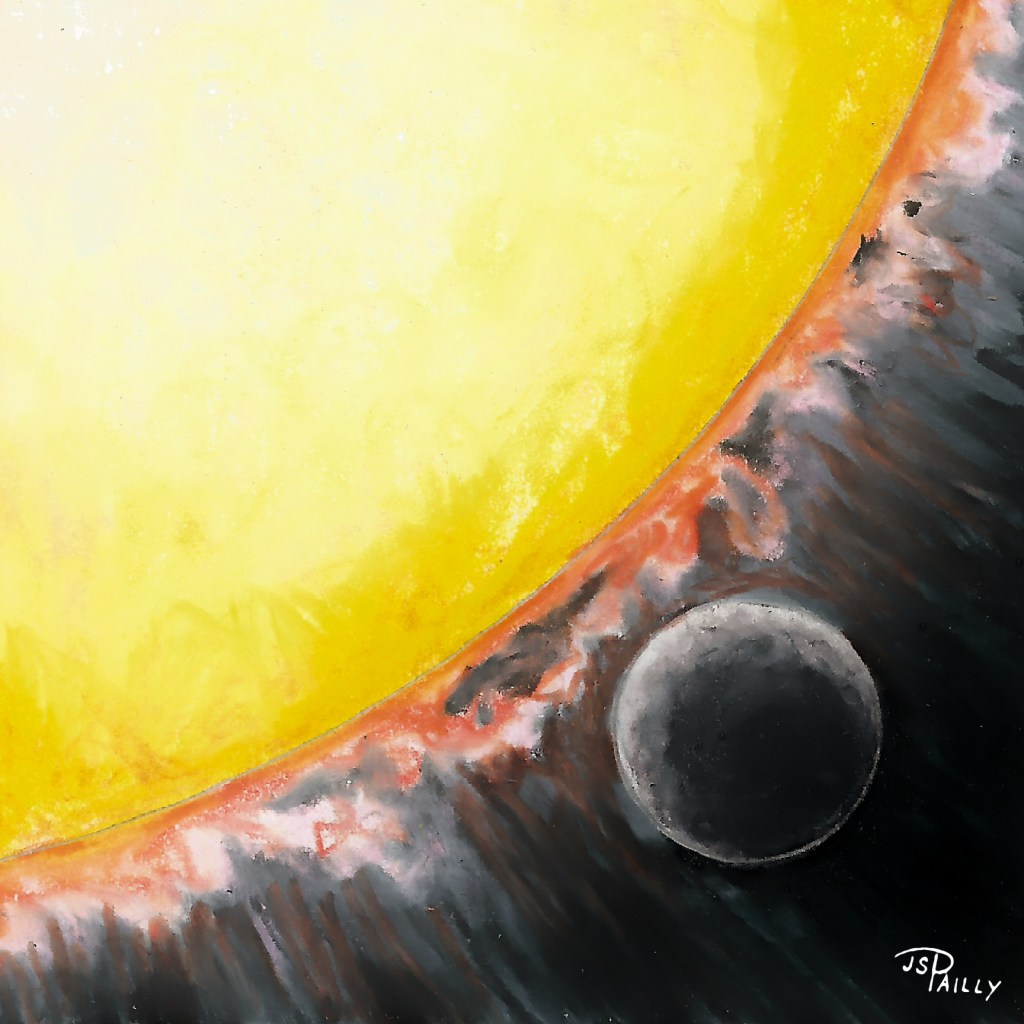
That being said, it’s still wild that we found water on Mercury, the planet closest to the Sun. You’d think all that heat from the Sun would have vaporized any water on Mercury a long, long time ago. But it turns out there are some very deep craters clustered around Mercury’s north and south poles. The crater walls are tall. The bottoms of these craters are perpetually shielded from the Sun. And what did we find at the bottoms of these craters? You guessed it. Ice. Gigantic sheets of H2O ice.
How did all that ice end up on Mercury? Best guess is that at some point, a very large comet slammed into Mercury. The impact scattered icy material all over the planet. Most of this ice was then vaporized by the heat of the Sun, but any ice that happened to fall into those deep, dark craters near Mercury’s poles was protected. And there it remains to this day.
Thanks for reading, friends! I hope you’ll come back for my next post, when I’ll share my #1 favorite fact about Venus.


Water ice on Mercury! That’s a “wow.” Can’t wait till you get to Saturan 🙂
LikeLiked by 1 person
“Saturn.” Good thing I have spell check when I write stories.
LikeLiked by 1 person
Saturn should be fun. All the planets will be fun!
LikeLike
Ice on Mercury – I learned something new!
LikeLiked by 1 person
Hooray!
LikeLike