Mercury in the Sky with Diamonds

Hello, friends!  Today’s post is mainly intended for Sci-Fi writers, but I’m hoping others will find it interesting, too.

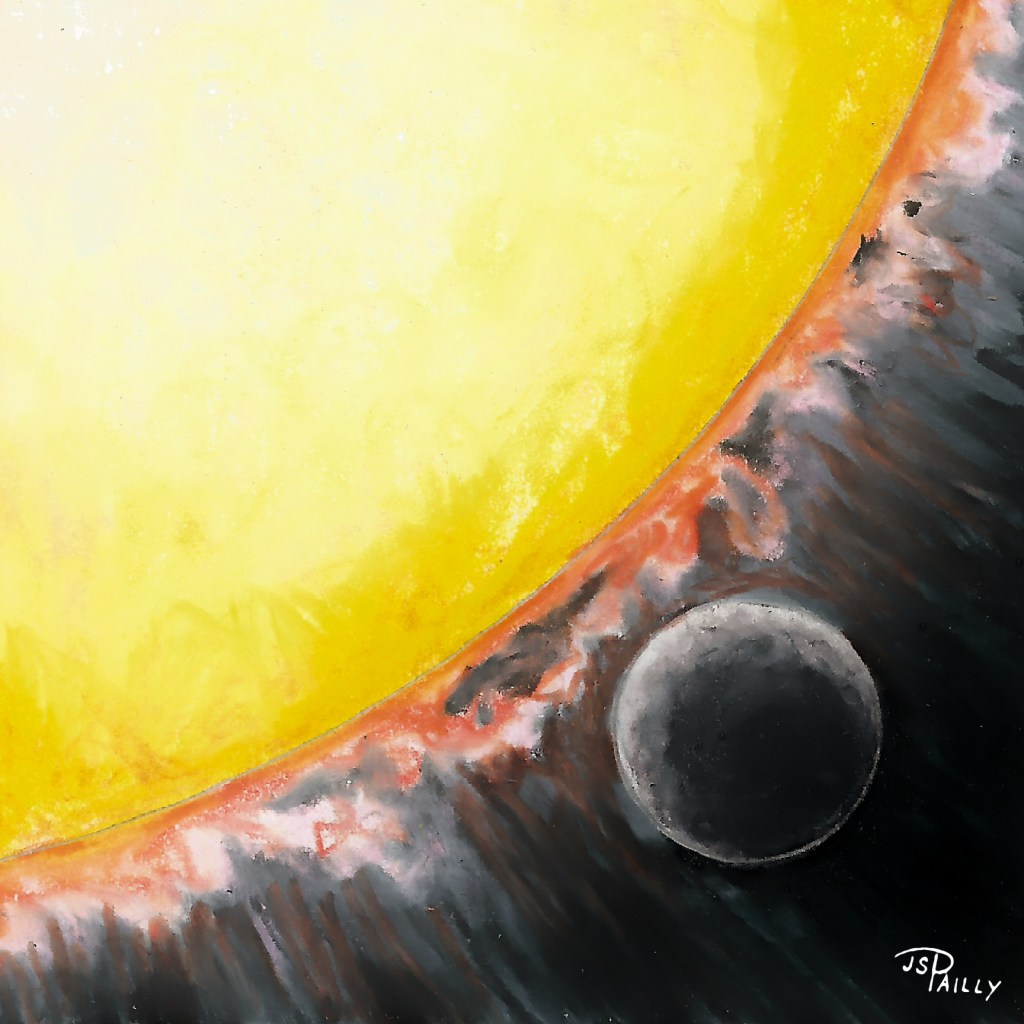
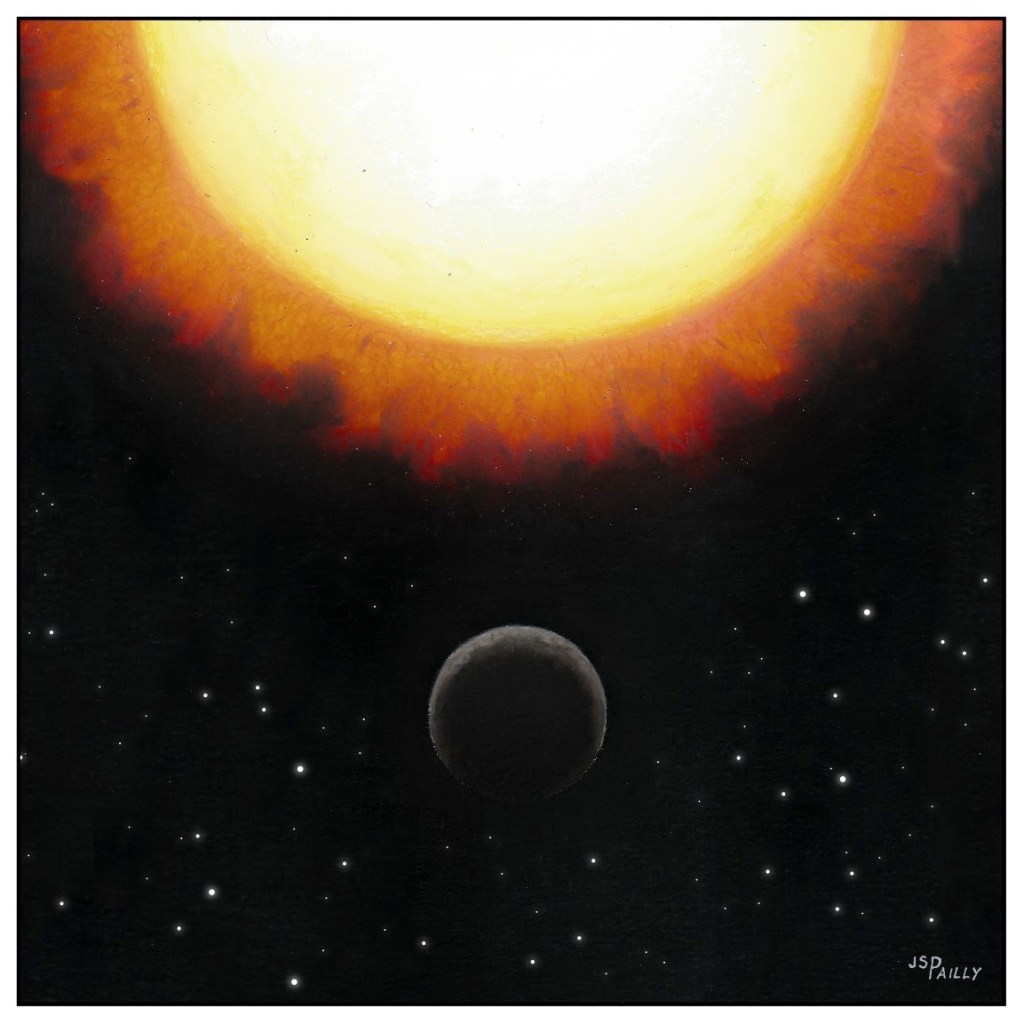
Mercury, the planet closest to the Sun, perhaps the most overlooked and under-appreciated planet in the Solar System, may possess a precious and beautiful secret: diamonds.  So many diamonds!  Tiny diamonds may be scattered all across Mercury’s surface, with even more diamond buried deep, deep, deep underground.

Superficially, Mercury looks a lot like Earth’s moon.  They’re both rocky, airless worlds peppered with impact craters.  They’re both kind of grey, except Mercury is a darker shade of grey than the Moon.  That darker color is caused by graphite (the same graphite found in pencil lead).

For whatever reason, when Mercury first formed, it ended up with an overabundance of carbon (and an underabundance of stuff that would normally react with carbon).  As a result, carbon atoms combined with other carbon atoms to produce plain, simple graphite.

But as I said, Mercury (like the Moon) is covered with impact craters.  A whole lot of impact craters.  In fact, Mercury is the #1 most heavily cratered planet in the Solar System.  And so, whenever an asteroid or comet rammed full speed into Mercury, the force of that impact would have put Mercury’s graphite under sudden and extreme pressure—enough pressure to compress ordinary graphite into diamond.

According to one source I read (see the “want to learn more?” section below), there’s an estimated 16 quadrillion tons of diamond on Mercury’s surface.  That’s about 16 times more diamond than the estimated total amount of diamond we have here on Earth.  But wait, there’s more!  According to another source I read (again, see the “want to learn more?” section below), Mercury may also have a layer of pure diamond buried deep underground.  This diamond layer would be roughly 10 miles thick, and it would lie roughly 300 miles down.

Given that synthetic diamonds already exist, would Mercury’s superabundance of diamonds be worth anything in the distant future?  I don’t know, but I feel like there’s potential here for a Sci-Fi story.  Whenever I learn a weird and quirky science fact like this, I treat it like a writing prompt and see if any good Sci-Fi ideas come out of it.

But I don’t have any plans to write a story about diamond mining on Mercury, which is why I’m sharing this weird and quirky science fact here on the blog, so other Sci-Fi writers can read this and ponder over it.  The planet Mercury is brimming with diamonds—way, way more diamonds than we have here on Earth.  How would you use that science fact for science fiction?

WANT TO LEARN MORE?

Here’s an article from Science News explaining how impact events on Mercury create diamonds on Mercury’s surface.

And here’s an article from Live Science explaining how a 10 mile thick layer of diamond might have formed deep beneath Mercury’s surface.

Also, I did another post on Mercury just a couple of weeks ago.  If you want to learn a few more fast facts about Mercury, click here.

The art featured in today’s post is my own original work.  If you like my art and want to support what I do on this blog, please consider visiting the I-Love-Space store on RedBubble.  Even if you don’t buy anything, just visiting and clicking the like button on some of my work would help me a lot (and obviously, if you do end up buying something, that would help me even more!).

Thank you, friends!

Mercury’s #1

Hello, friends!

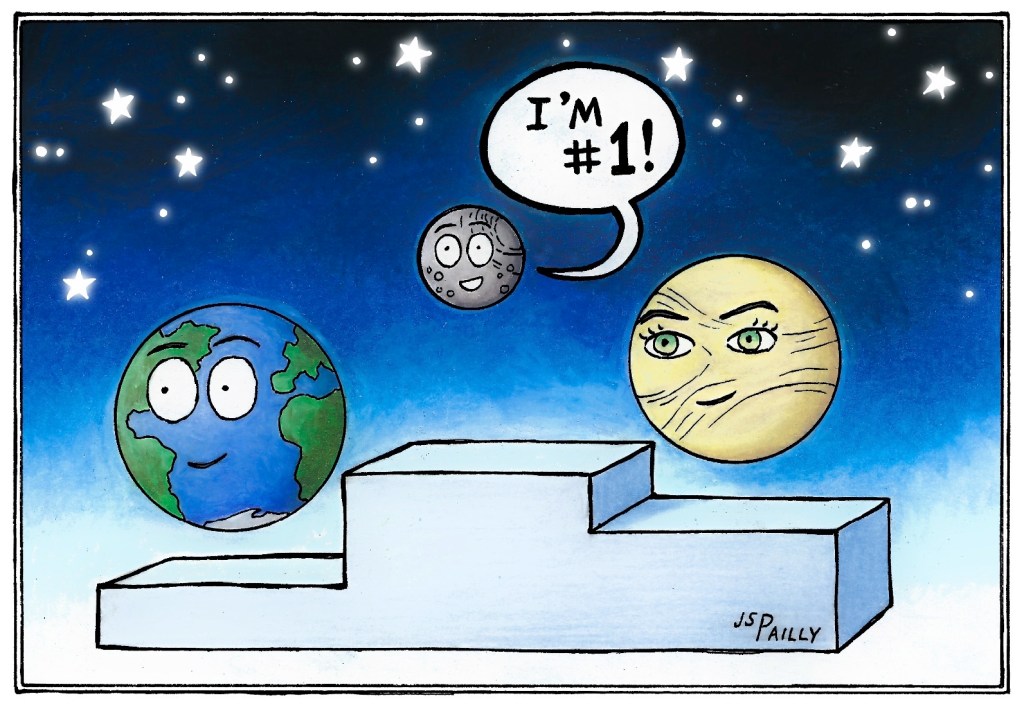
I love Mercury.  He’s the planet closest to the Sun, which makes him the first planet of our Solar System.  Sadly, that seems to be the limit of what the average person knows about Mercury, so today I’d like to share just a few other ways Mercury wins first place.

First off, if there were a footrace among all the planets of the Solar System, Mercury would win.  Easily.  Mercury is the #1 fastest moving planet in the Solar System.  This has a lot to do with Kepler’s laws of planetary motion and Netwon’s law of universal gravitation, but I think I can explain this without digging into Kepler or Newton’s math.  Imagine you’re a planet and you don’t want to fall into the Sun.  You’ll need to keep moving to maintain your orbit.  The closer you are to the Sun, the more you’ll have to fight the Sun’s gravity, and thus the faster you’ll have to move.  Mercury is the closest planet to the Sun; ergo, he’s the fastest.  (If you’d like to learn more about the math behind planetary motion, click here.)

Since Mercury is the planet closest to the Sun, you might assume Mercury is also the hottest planet.  But no, Venus is hotter than Mercury (how that happened is a story for another time).  However, Mercury does have the #1 most extreme difference between daytime and nighttime temperatures.  Daytime temperatures climb as high as 430 degrees Celsius (800 degrees Fahrenheit).  At night, the temperature rapidly drops as low as -180 degrees Celsius (-290 degrees Fahrenheit).  Why?  Because Mercury has virtually no atmosphere.  Atmospheres are like insulating blankets for planets.  Without an atmosphere, Mercury can’t retain heat at all, so all the extreme heat Mercury gets during the day is immediately lost to the vacuum of space at night.  (To learn more about Mercury’s daytime vs. nighttime temperatures, click here.)

There are plenty more ways Mercury is #1, but I’m only going to share one more with you today.  Mercury is the #1 most heavily cratered planet in the Solar System.  How did that happen?  Well, once again, Mercury has no atmosphere, which means all the smaller meteoroids that would burn up in the atmospheres of other planets make it straight through to the ground on Mercury.  Additionally, there’s very little geological activity on Mercury.  No volcanic eruptions, no major earthquakes (mercuryquakes?)… at least not in the last 3.5 billion years.  On other worlds, geologic activity helps erode and erase old impact craters, but that’s not happening on Mercury.  So Mercury gets hit more easily and has a harder time erasing old impact craters.  Those two facts add up to Mercury having more impact craters today than any other planet in our Solar System.  (To learn more about Mercury’s overabundance of craters, click here.)

In my humble opinion, Mercury doesn’t get as much love as he deserves.  I don’t know why that is, but I hope this post has piqued your curiosity and helped you appreciate Mercury a little bit more.  At the time of this writing, the BepiColombo space probe (a joint venture by the European and Japanese space agencies) has completed several flybys of Mercury.  If all goes according to plan, BepiColombo should settle into orbit around Mercury in November of this year (2026).  Here’s hoping BepiColombo will discover even more reasons to love the first planet from the Sun.

The art is today’s post is my own original work.  If you like my art, please consider visiting the I-Love-Space store on RedBubble.  Even if you don’t buy anything, just visiting and clicking the “like” button on my work helps me a lot (and obviously, if you do decide to buy something, that helps me even more).  Thank you, friends!