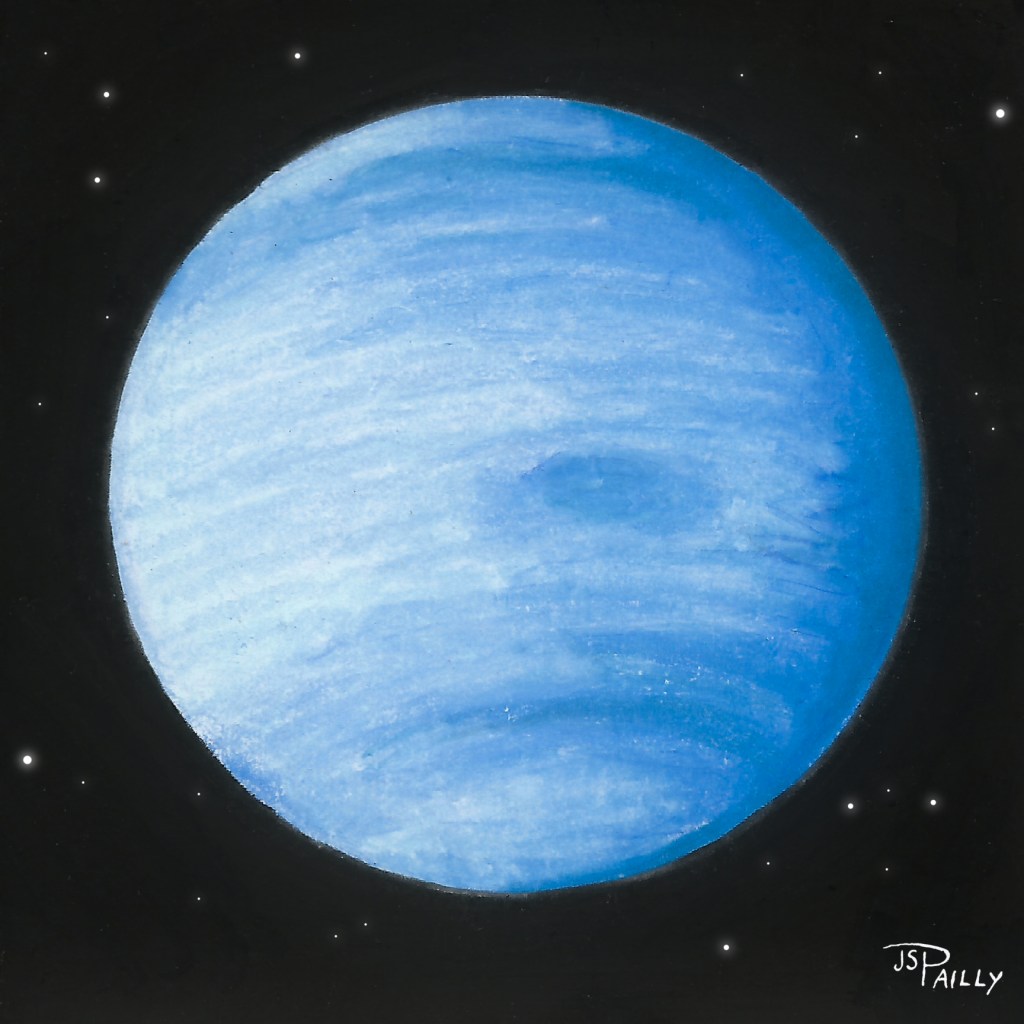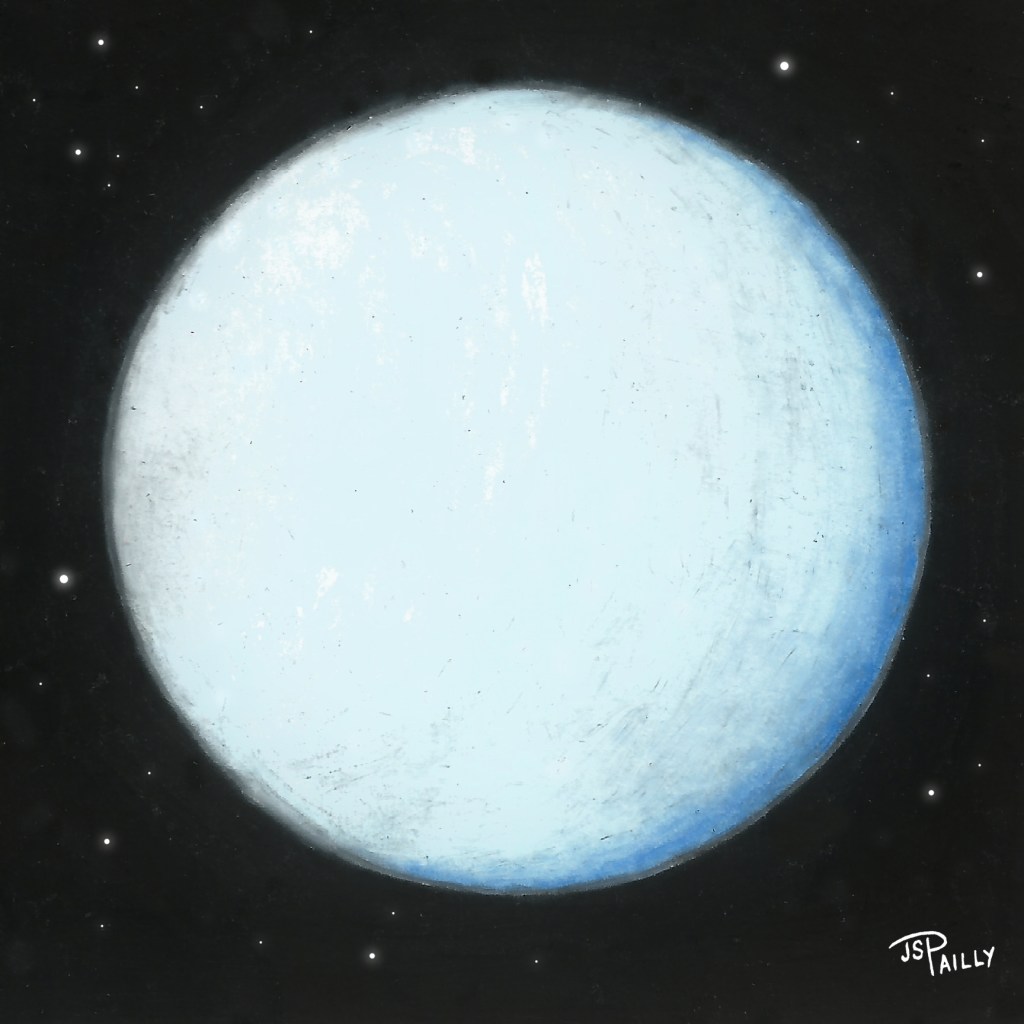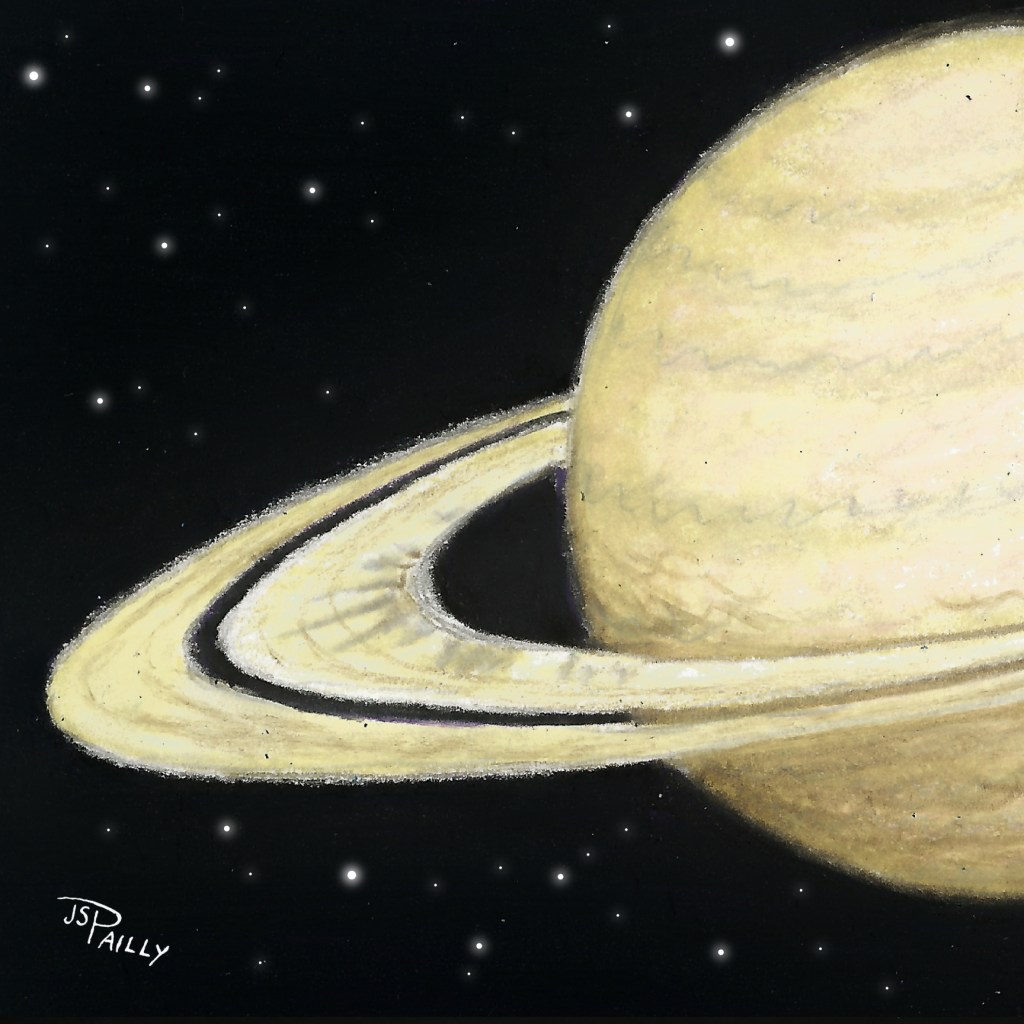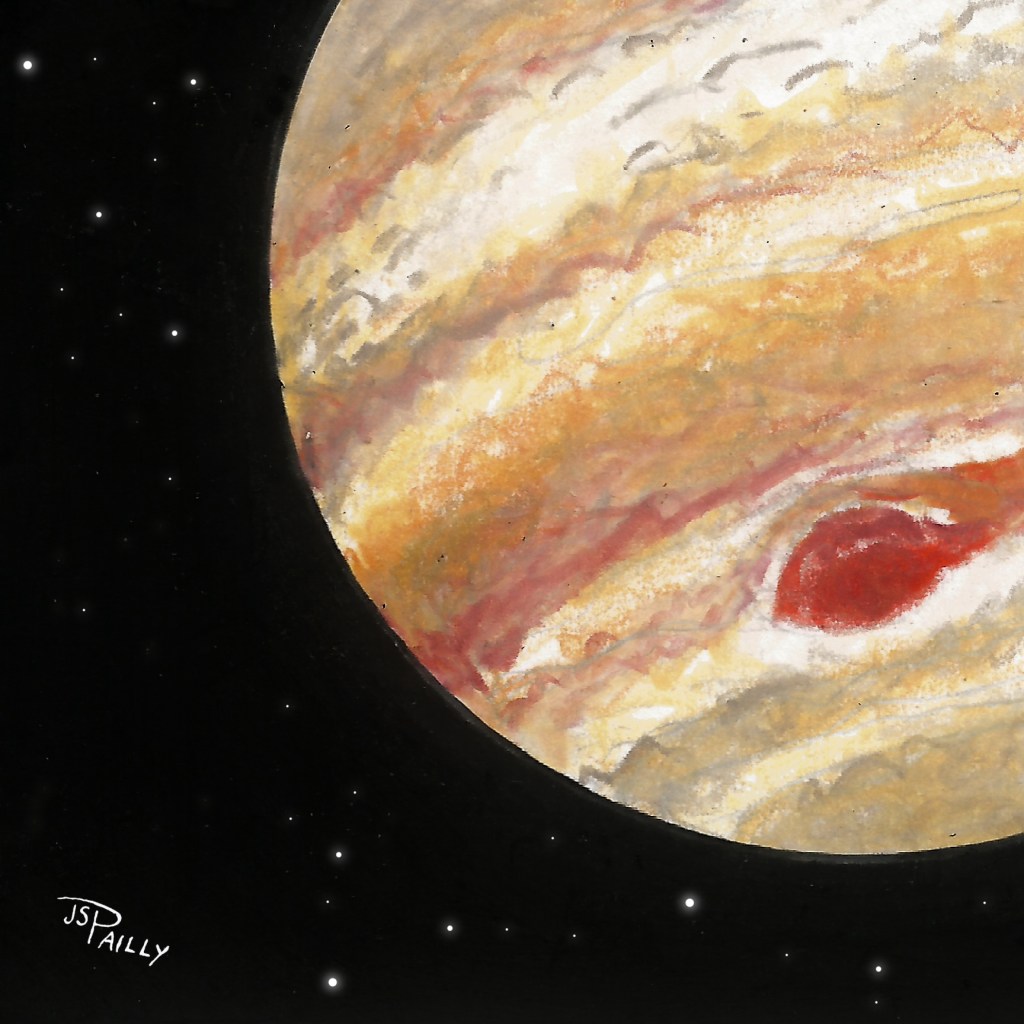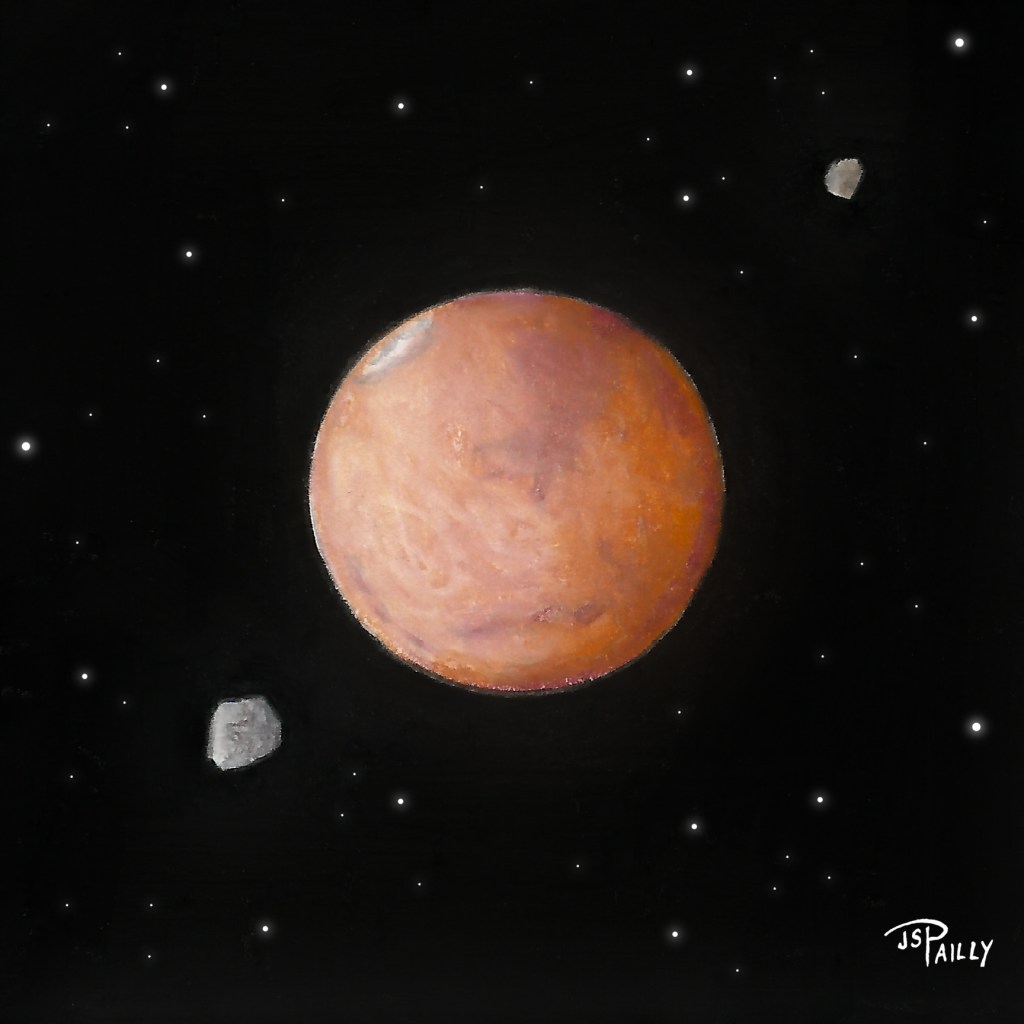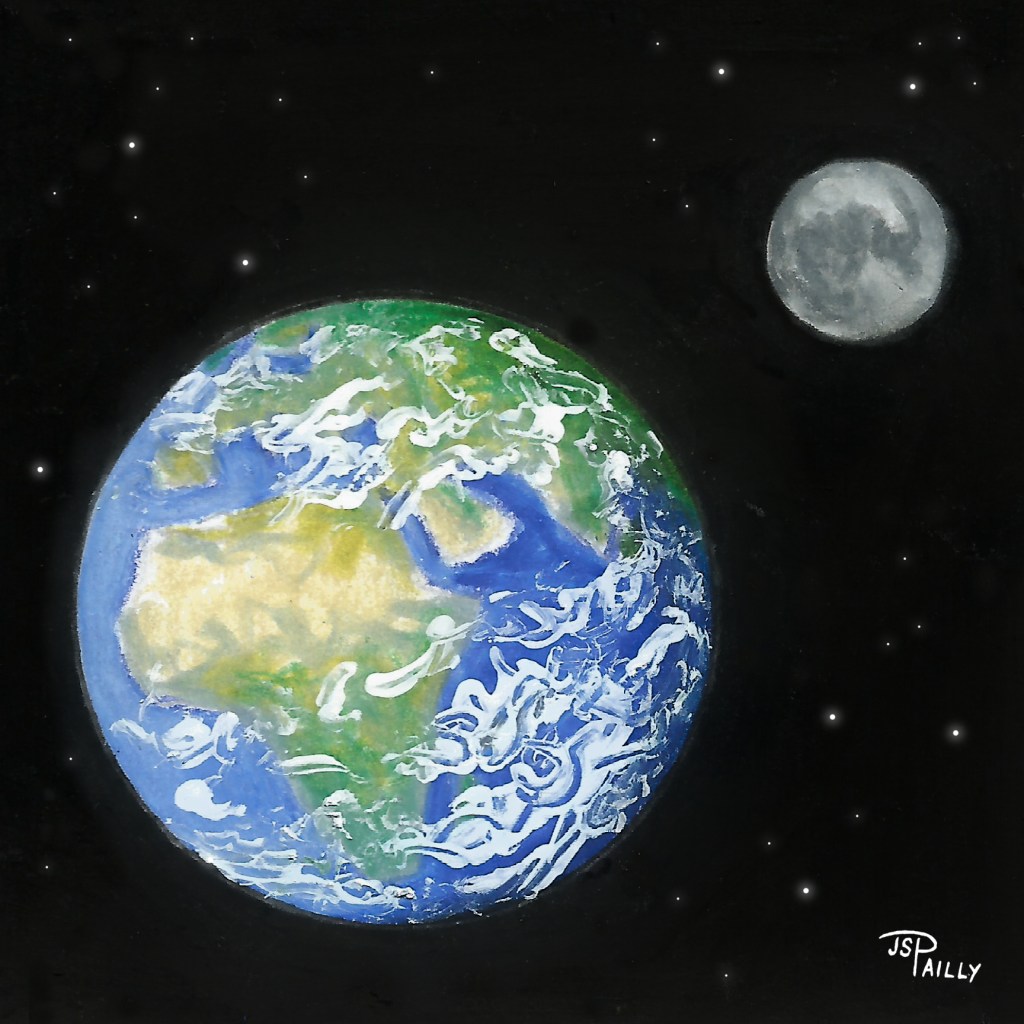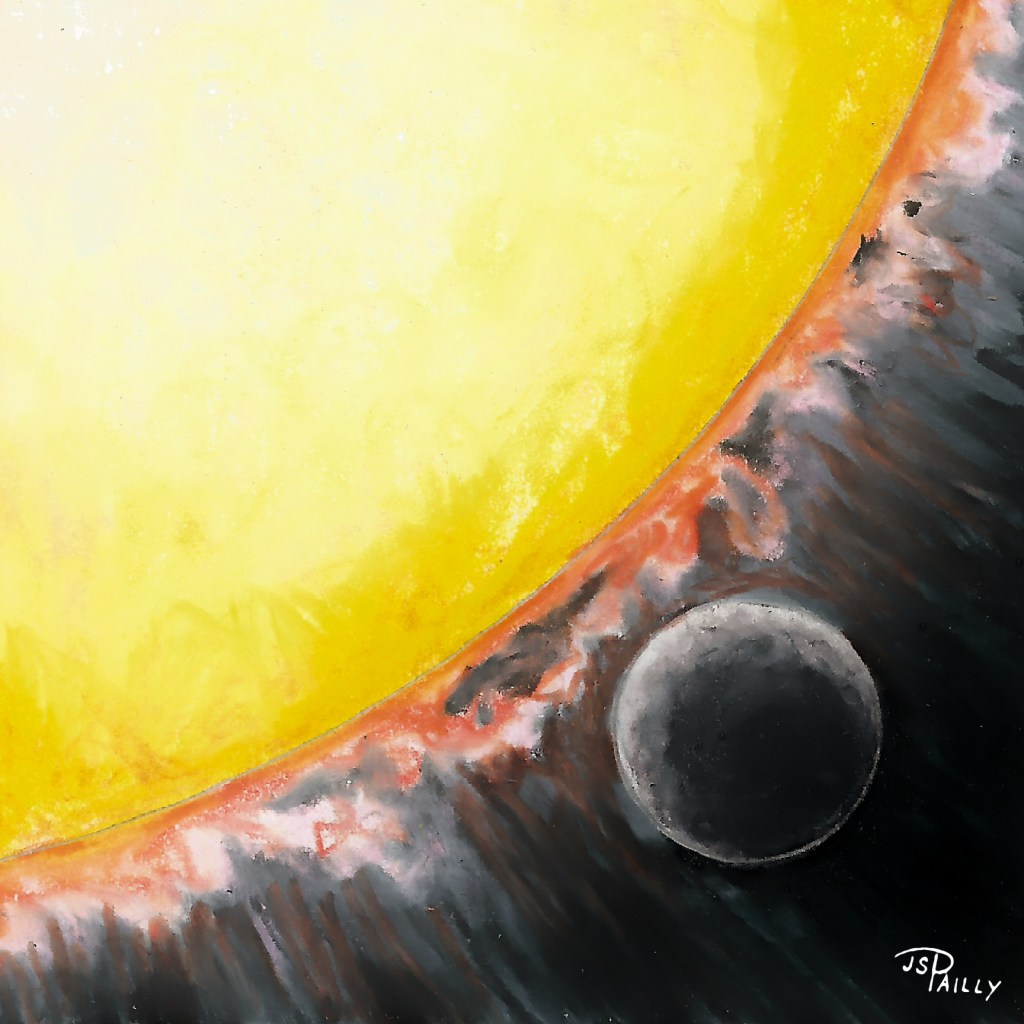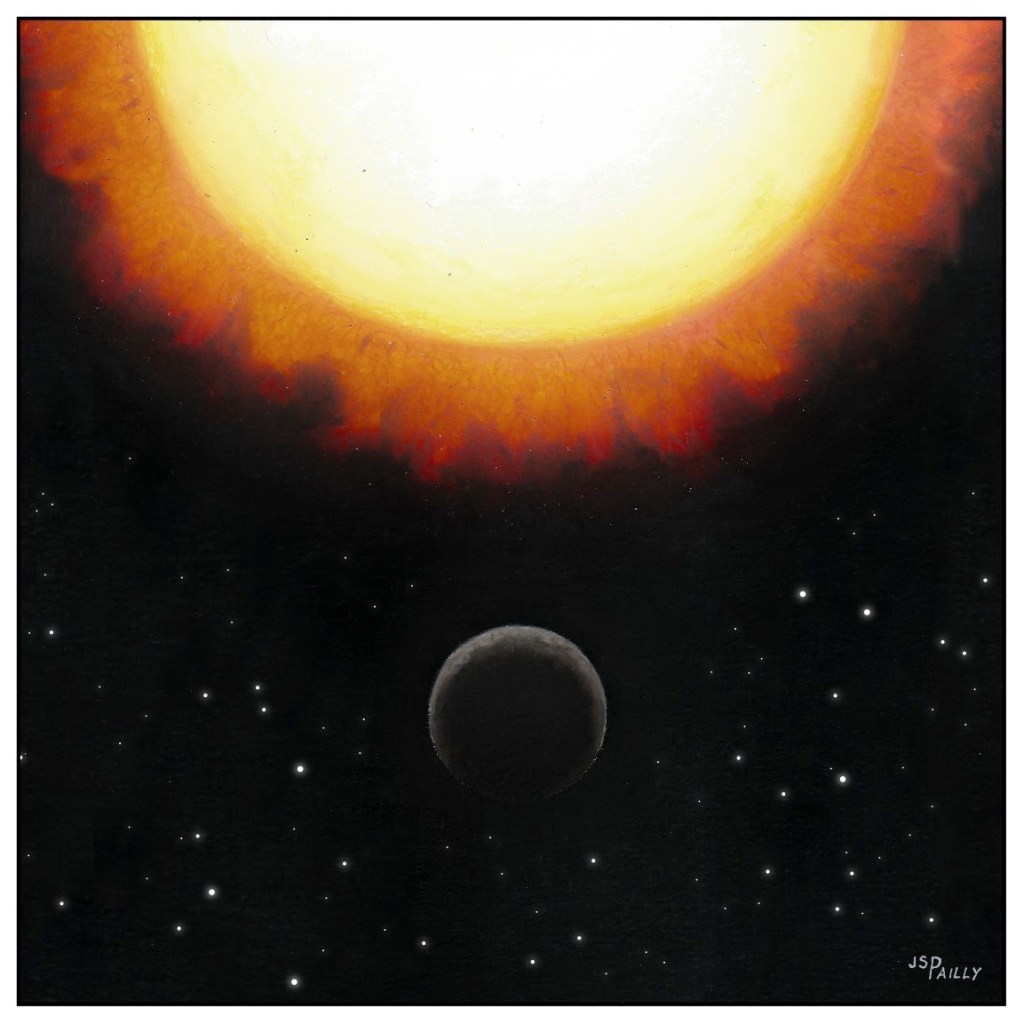
Mercury’s #1

Hello, friends!

I love Mercury.  He’s the planet closest to the Sun, which makes him the first planet of our Solar System.  Sadly, that seems to be the limit of what the average person knows about Mercury, so today I’d like to share just a few other ways Mercury wins first place.

First off, if there were a footrace among all the planets of the Solar System, Mercury would win.  Easily.  Mercury is the #1 fastest moving planet in the Solar System.  This has a lot to do with Kepler’s laws of planetary motion and Netwon’s law of universal gravitation, but I think I can explain this without digging into Kepler or Newton’s math.  Imagine you’re a planet and you don’t want to fall into the Sun.  You’ll need to keep moving to maintain your orbit.  The closer you are to the Sun, the more you’ll have to fight the Sun’s gravity, and thus the faster you’ll have to move.  Mercury is the closest planet to the Sun; ergo, he’s the fastest.  (If you’d like to learn more about the math behind planetary motion, click here.)

Since Mercury is the planet closest to the Sun, you might assume Mercury is also the hottest planet.  But no, Venus is hotter than Mercury (how that happened is a story for another time).  However, Mercury does have the #1 most extreme difference between daytime and nighttime temperatures.  Daytime temperatures climb as high as 430 degrees Celsius (800 degrees Fahrenheit).  At night, the temperature rapidly drops as low as -180 degrees Celsius (-290 degrees Fahrenheit).  Why?  Because Mercury has virtually no atmosphere.  Atmospheres are like insulating blankets for planets.  Without an atmosphere, Mercury can’t retain heat at all, so all the extreme heat Mercury gets during the day is immediately lost to the vacuum of space at night.  (To learn more about Mercury’s daytime vs. nighttime temperatures, click here.)

There are plenty more ways Mercury is #1, but I’m only going to share one more with you today.  Mercury is the #1 most heavily cratered planet in the Solar System.  How did that happen?  Well, once again, Mercury has no atmosphere, which means all the smaller meteoroids that would burn up in the atmospheres of other planets make it straight through to the ground on Mercury.  Additionally, there’s very little geological activity on Mercury.  No volcanic eruptions, no major earthquakes (mercuryquakes?)… at least not in the last 3.5 billion years.  On other worlds, geologic activity helps erode and erase old impact craters, but that’s not happening on Mercury.  So Mercury gets hit more easily and has a harder time erasing old impact craters.  Those two facts add up to Mercury having more impact craters today than any other planet in our Solar System.  (To learn more about Mercury’s overabundance of craters, click here.)

In my humble opinion, Mercury doesn’t get as much love as he deserves.  I don’t know why that is, but I hope this post has piqued your curiosity and helped you appreciate Mercury a little bit more.  At the time of this writing, the BepiColombo space probe (a joint venture by the European and Japanese space agencies) has completed several flybys of Mercury.  If all goes according to plan, BepiColombo should settle into orbit around Mercury in November of this year (2026).  Here’s hoping BepiColombo will discover even more reasons to love the first planet from the Sun.

The art is today’s post is my own original work.  If you like my art, please consider visiting the I-Love-Space store on RedBubble.  Even if you don’t buy anything, just visiting and clicking the “like” button on my work helps me a lot (and obviously, if you do decide to buy something, that helps me even more).  Thank you, friends!

Artemis II: She’s Not Like Other Missions

Hello, friends!

It’s been a couple weeks since Artemis II went to space, looped around the Moon, and returned safely to Earth.  One thing really surprised me during this mission: I didn’t hear many people whining about the cost.  Whenever important NASA stuff is in the news, I always hear a ton of people whining about the cost.  But this time, not so much!  Which leaves me wondering: why was Artemis II different?

The most obvious explanation is that while Artemis II was up in space, there was this other major news story happening down here on the ground.  Now this is not a political blog, and I don’t want to dwell on politics too long, but we can’t ignore the elephant in the room: the war.  Just before Artemis II launched, the U.S. started a war with Iran.  That war is wildly unpopular and also extravagantly expensive.  When we keep hearing about the government spending one or two billion dollars per day on the war, NASA’s budget of $24 billion per year doesn’t sound so bad.

But I don’t think that’s the only reason.  Space launches used to be rare and extraordinary events, but in the last few years, they’ve been normalized.  With private companies like SpaceX and Blue Origin in the game, launches happen all the time now.  There were something like 300 launches worldwide last year!  Artemis II was still something new and different and very, very special; at the same time, though, it was just another rocket launch.  If we’re going to have 300 launches per year, it doesn’t seem outlandish for one of them to be a Moon mission.

Do you think I’m right about this?  Was your experience similar to mine, or did you hear more grumbling and griping about Artemis II’s price tag than I did?  Let me know in the comments below.

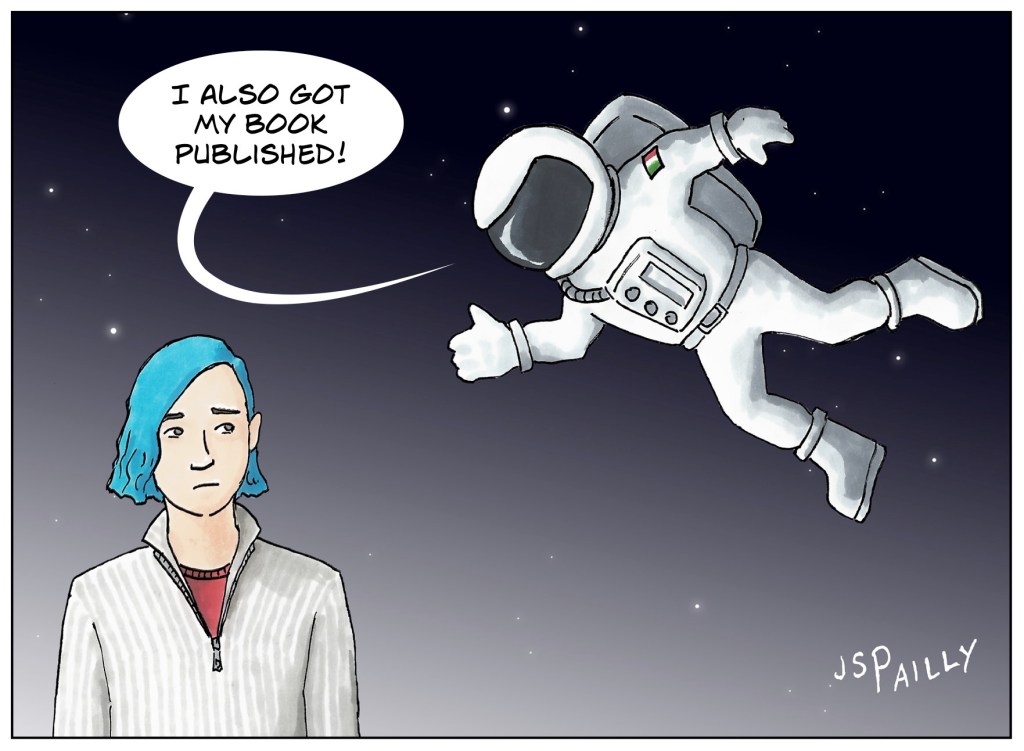
I will acknowledge that I did hear one complaint.  It was some political pundit who said something like: “NASA just sent billions of taxpayer dollars to the Moon!”  There’s plenty I could say in response to that, but that statement conjured such an amusing mental image in my head.  So I’m just going to leave you with this:

WANT TO LEARN MORE?

It wasn’t just me who felt like Artemis II was different.  According to this article from Forbes, the vast majority of Americans support the Artemis program and followed the Artemis II mission closely.

If you want to know more about NASA’s budget, check out this article from the Planetary Society.  It’s a great resource, not only for understanding NASA’s budget in particular, but for understanding the U.S. federal budgeting process as a whole.

And if you’re up for some more academic literature, here’s a research paper from the journal Space Policy examining how the federal government sometimes does (and sometimes does not) listen to public opinion regarding space exploration.

IWSG: Not Because It Is Easy, But Because It Is Hard

Welcome to this month’s meeting of the Insecure Writer’s Support Group, a blog hop created by Alex J. Cavanaugh and co-hosted this month by Melissa Maygrove, Cathrina Constantine, Kate Larkinsdale, and Rebecca Douglass.  Are you a writer?  Do you feel insecure?  Well, then this is the support group for you!  Click here to learn more and to see a list of participating blogs.

Hello, friends!

Later today, if all goes according to plan, NASA’s Artemis II Mission will launch from Kennedy Space Center, carrying four astronauts on a ten-day voyage around the Moon and back again.  Artemis II will not land on the Moon, but this will still be the farthest any human has traveled away from Earth since the 1970’s.  I bring this up for today’s IWSG post because the space program has always been my favorite metaphor for writing.

First off, we writers are always falling behind schedule, always scrambling to keep up with our deadlines, and frequently missing our deadlines despite our best efforts—much like the space program!  Artemis II, for example, was originally supposed to launch in 2024, but there were set-backs.  Unforeseen difficulties.  Stuff happened and got in the way.  It honestly doesn’t take much.  I remember a rocket launch being postponed due to something as simple as a cloud being in just the wrong place at just the wrong time.  I don’t know about you, but I’ve had plenty of writing days ruined by problems almost as simple.

Another thing we writers have in common with the space program: we can’t just do the same thing over and over again.  Every space mission has different objectives, faces exceptional challenges, and requires its own unique innovations in order to succeed.  The same can be said for each new story we writers write.  Sure, there are tried-and-true formulas we can turn to for guidance.  There may be certain methods and techniques that have been helpful before and may be helpful again.  But at some point along the way, we’re going to have to do something we’ve never done before.  That’s the scariest part of the journey.  Simultaneously, that’s the part that make the journey worth taking.

And lastly, both writers and the space program have to deal with naysayers and critics: people who don’t get it, people who don’t see the point.  Why waste so much time, effort, and money reaching for the stars when there are more pragmatic things we could be doing here on the ground?  I don’t think these people understand the difference between the cost of a thing and its value.  The space program is very expensive—I am not denying that—but its value to our species is far, far greater.  Similarly, I don’t believe the value of writing can be measured with money—not my writing, and not yours.

So, my fellow writers: keep writing, keep dreaming, keep reaching for the stars.  It won’t be easy.  Writing is never easy.  But as President Kennedy would remind us: we do these things “not because they are easy, but because they are hard.”

Aliens Don’t Exist

Hello, friends!

Today, I’d like to tell you a little about my 6th grade science teacher.  Oh, I remember him well!  Just not for the best of reasons.  For the purposes of this blog post, let’s call him Mr. M.

So one day, Mr. M. was teaching us about the formation of the Solar System, about how the planets of our Solar System were created from a cloud of dust and gas swirling round and round the Sun.  During this lesson, Mr. M. told us that our Solar System is unique.  He told us that science had not yet discovered any other planets orbiting any other stars, and he hazarded to guess that science never would.  He said that maybe there are no other planets out there for science to find.

Imagine that!  In the whole big, wide universe, there are only nine planets (Pluto was still considered a planet at the time).  And furthermore, the only nine planets in the entire universe all happen to be orbiting the same star!  That sounds pretty silly today, with over 6100 confirmed exoplanet discoveries now in the books.  It was also a silly thing to say at the time.  This would have been in 1996.  The first two exoplanets were discovered in 1992, orbiting a pulsar.  A third exoplanet was discovered in 1994, orbiting that same pulsar.  And then 51 Pegasi b, the first exoplanet discovered orbiting a sun-like star, was discovered in October of 1995.

So not only would science prove Mr. M. wrong—it already had.

I think about Mr. M. whenever someone tells me we’ll never discover alien life.  I think about Mr. M. whenever someone tells me that maybe there’s no alien life out there for us to find.

Frankly, I think about Mr. M. every time someone claims science will never do this or never explain that.  I may not have learned much in my 6th grade science class, but that class did help me learn one thing: there’s a long history of science proving people like Mr. M. wrong.

P.S.: Mr. M. also told us the Internet was just a fad and everyone would forget about it in a few years.  Again, this was in 1996.

The art in today’s post is my own original work.  If you like my art, please consider visiting the I-Love-Space store on RedBubble.  Even if you don’t buy anything, just visiting and clicking the “like” button on some of my work helps me a lot (and if you do decide to buy something, that obviously helps me even more!).  Thank you!

Betelgeuse and Siwarha

Hello, friends!

I love space, but I also love language and words and names, and I especially love it when people put thought and care into the naming of things.  Betelgeuse is a super famous supergiant star in the constellation Orion.  For as long as I can remember, it was generally assumed that Betelgeuse was a loner.  A single star, all by herself, with no binary companion.  But now it seems that Betelgeuse does have a very small, very faint companion star, which astronomers have (very aptly) named Siwarha.

Back in 2019/2020, astronomers noticed Betelgeuse start to flicker and dim.  There was a rapid 30% decrease in Betelgeuse’s brightness, leading to rampant speculation that Betelgeuse was about to go up in a supernova explosion.  That would have been an amazing sight for all of us here on Earth!  But then, nothing happened, and Betelgeuse’s brightness eventually went back to normal.

The Great Dimming of Betelgeuse, as this event is now called, was caused by something less spectacular than a supernova (less spectacular, but still interesting—check out the “want to learn more?” section below if you want to learn more).  Still, during the Great Dimming, Betelgeuse got a lot more attention from astronomers than usual, and astronomers started noticing patterns in her behavior—including a pattern that (based on reexamining historical records) seemed to repeat every 2100 days.

One possible explanation: maybe Betelgeuse has a companion star with an orbital period of 2100 days.  This hypothetical companion star was initially nicknamed “Betelbuddy.”  But then, in December of 2024, astronomers at the Gemini North Observatory in Hawaii were able to directly image “Betelbuddy” in mid-orbit.  At that point, Betelgeuse’s companion stopped being hypothetical, and somebody needed to give it a more official-sounding name.

Betelgeuse is an Arabic name (as most traditional star names are), and it means something like “the hand of the giant.”  The giant in question is, of course, Orion; however, the Arabic name for Orion is al Jawza, which is a female name from Arabian legend.  Therefore, since this newly discovered star circles round and round the hand of a lady giant, the Gemini North team proposed naming it “Siwarha,” meaning “her bracelet.”

How perfect is that?

Siwarha would have been hidden behind Betelguese during the Great Dimming, so it was not visible to Earth-based astronomers at that time, no matter how hard they looked for it.  Even after Siwarha emerged from behind Betelgeuse, spotting it stretched the limits of one of the very best telescopes in the world.  After crossing in front of Betelgeuse, Siwarha should appear again (on the opposite side of Betelgeuse) in late 2027, at which point astronomers should be able to learn much, much more about it.

WANT TO LEARN MORE?

Here’s a brief article published by NASA announcing the discovery of Siwarha.

And here’s a link to the actual research paper explaining how the Gemini North team detected Betelgeuse’s companion star.  The proposal to name it “Siwarha” is near the end of the paper.

As for the Great Dimming of Betelgeuse, it was caused by Betelgeuse burping a big, giant cloud of dust up into space, which partially obscured our view.  Click here to learn more about that.

P.S.: The art in today’s post is my own original work.  If you like my art, please consider visiting the I-Love-Space store on RedBubble.  Even if you don’t buy anything, just visiting and clicking the “like” button on some of my work helps me a lot (and if you do decide to buy something, that obviously helps me even more!).  Thank you!

IWSG: Answering My Inner Critic

Hello, friends!  Welcome to this month’s meeting of the Insecure Writers’ Support Group, a blog hop created by Alex J. Cavanaugh and co-hosted this month by Shannon Lawrence, Olga Godim, Jean Davis, and Jacqui Murray.  Are you a writer?  Do you feel insecure?  Well, then this is the support group for you!  Click here to learn more and to see a list of participating blogs.

Each month, IWSG asks members a question.  Answering the monthly question is not required.  It’s totally optional, which is good news for me, because there’s a different question plaguing my thoughts today.  A different question that keeps getting in the way of writing.  It’s a question that my inner critic keeps asking in snide, Smeagol-like whispers:

You’re no scientist.  You don’t work for NASA.  What gives you the right to blog about space exploration?

And I admit, my inner critic has a point.  I’m a huge fan of space exploration, and I probably do know more about space than the average person.  But still, I’m a long way away from being a true expert.  Plenty of others can speak with greater authority about space than I can.  Some of my readers know more about space than I do.

However, when my inner critic asks these sort of questions—questions like “What right do you have to blog about space?”—I think my inner critic misses the whole point of my blog.  I love space.  I’ve committed myself to learning as much as I can about space, and I believe that learning is a three step process:

  • Passive learning, which is the passive consumption of information from books, online lectures, etc.
  • Active learning, which means (among other things) reexplaining the information you’ve learned in your own words.
  • Receiving feedback, which involves people correcting your mistakes, asking interesting questions, suggesting topics for future research, etc.

From time to time, my inner critic reminds me that I’m not an astrobiologist, not a planetary scientist, not an aerospace engineer, and shames me into not writing.  But that doesn’t just shut down writing.  It shuts down my whole learning process.  If I don’t do my blogging, how will I learn?

Is that answer enough to silence my inner critic?  Actually, it is.  Inner critics are cowards.  They don’t know what to do when you talk back to them, they don’t know what to say when you stand up for yourself.  Much of what I said in today’s post is specific to my own writing and my own issues with my own inner critic.  But if your inner critic has been asking snide questions and shaming you into not writing, then I hope you’ll start talking back like I did.  It really works.

Mission Statement

Hello, friends!

Today is New Year’s Day, so I thought today would be a great day to restate the mission statement of this blog—except it seems I never stated the mission of this blog in the first place.  I could’ve sworn that I had.  Maybe that’s because my mission seems self-evident.  I love space.  I love learning about space, and I love sharing what I learn with others.

The learning part is really important to me.  My love of space doesn’t mean just looking up at the stars and thinking, “Ooooh, pretty!”  I don’t enjoy wonder for wonder’s sake.  My love for space means looking up at the stars, wondering what’s up there, wondering who’s out there, and then putting in the time and effort to find answers (to the best of my ability as someone who’s bad at math and doesn’t have any professional scientific training).

Learning is hard.  Finding good sources of information can be tricky, and even when you do find trustworthy sources, science is still a challenging subject.  Scientists aren’t always the most engaging or entertaining communicators.  But if learning this stuff were easy, I don’t think it would be fun.  The greater the challenge, the greater the reward when you finally do understand a difficult and complicated concept.

So on this blog, I want to tell you about all the cool stuff I learn about space.  I also want to talk about the process I go through to learn this stuff, because the research process is part of the fun.  If you don’t know much about space, I hope to inspire you to love space like I do.  And if you already love space, then I hope to inspire you to love space even more!

But there will be some of you who don’t really care about space and never will.  I want you to know that that’s okay.  We can still be friends.  Not everybody has to love the same things.  I have an I.R.L. friend who’s not very interested in space, no matter how much I talk about it, but she paid me one of the very best compliments I’ve ever received: “You make me want to go learn stuff.”

That’s the real mission of this blog: to spread the love of learning.  I want to set a good example by picking a topic that fascinates me (space, obviously!) and learning everything I can about it.  For you, maybe it’s sports trivia, or Greek antiquities, or horses, or the history of music in video games, or the architecture of Frank Lloyd Wright… it doesn’t matter.  What matters is that learning is one of the greatest joys in life.  I love learning, and I hope you do, too.

Thanks for reading, friends!  Talk to you soon!

P.S.: If you like my art, click here to visit my art store on RedBubble.  Even if you don’t want to buy anything, just visiting and maybe clicking the “like” buttons on my art will help me a lot (and if you do want to buy something, that would help me a lot, too!).

3I/ATLAS: It’s Not Aliens

Hello, friends!

You know the expression “If it looks like a duck, swims like a duck, and quacks like a duck, it’s probably just a duck”?  Well, to a certain kind of person, if it looks like a duck and swims like a duck and quacks like a duck, then it must be an extraterrestrial life form that the government has disguised as a duck.  Right now, there’s an interstellar object passing through our Solar System.  It looks like a comet.  It moves like a comet.   It’s grown a tail like a comet.  I think you know where I’m going with this.

Astronomers have named this object 3I/ATLAS.  The “3I” part of the name means this is the 3rd interstellar object we’ve spotted inside our Solar System (the previous two were 1I/Oumuamua and 2I/Borisov).  The “ATLAS” part means this object was first detected by the Asteroid Terrestrial-impact Last Alert System (ATLAS for short).  Ever since the discovery of 3I/ATLAS, there’s been a lot of speculation online, in the news, and even in some corners of the scientific community about how this object might/must be an alien spaceship or alien space probe—or even an alien space weapon!  But this is coming from the same people who cry aliens whenever anything even remotely interesting happens in outer space.

As someone who loves space, I find all this “BuT WhaT iF iT’s ALieNs?” talk annoying and disheartening, because 3I/ATLAS doesn’t need to be aliens in order for it to be interesting.  For example, did you know 3I/ATLAS is insanely old?  By most estimates, it’s approximately 7 billion years old, which makes it 50% older than our entire Solar System.  3I/ATLAS also seems to be composed of unusually high quantities of frozen carbon dioxide (and correspondingly low quantities of frozen H2O).  I’ve read several different possible explanations for this, but the one I find most intriguing is that 3I/ATLAS may come from a star system where water is extremely scarce.

When we learn new things about outer space, ironically, we often end up learning even more about the Earth.  I’ve said before on this blog that our ability to compare and contrast Earth with other planets in the Solar System has taught us a great deal about our home planet.  Now our science has advanced to a point where we can identify interstellar objects as they pass through our Solar System.  We can observe them and study them and use that information to start comparing and contrasting our Solar System with whatever star systems these objects originally came from.  I don’t know what we’ll learn by doing that, but I know we’re going to learn something, and I love that for us!

As for the aliens… someday, I believe we will discover alien life, and that day will be awesome!  If 3I/ATLAS really were an alien spacecraft, that would be awesome, too, but that hypothesis is based more on wishful thinking than actual evidence.  I, for one, think the actual evidence about comet 3I/ATLAS tells a far more interesting story than all the wishful thinking in the world ever could.  How about you?

WANT TO LEARN MORE?

There’s a lot of confusing and conflicting information out there right now about 3I/ATLAS, even without the people crying “it’s aliens!”  That’s because 3I/ATLAS is still under heavy observation at the moment, and new data is coming in at a rapid pace.  That being said, I’m going to recommend these two articles, which I feel give a pretty good synopsis of how much we know so far and how much more we’re hoping to learn.

I also want to recommend this video from Hank Green, titled “Why it’s Never Aliens,” for a more detailed analysis of why, whenever people cry aliens, it never turns out to be aliens.

I Love Earth

Hello, friends!

As you know, I love space, and as you might imagine, I socialize with a lot of other people (both online and I.R.L.) who also love space.  But in the last year or so, I’ve noticed a change in the space love community.  It used to be that if you loved space, it naturally followed that you also loved planet Earth.  But that’s not the case anymore.  Not for everybody.  These days, for some people, it seems that love for space equals disdain for Earth.

I’ve seen this disdain for Earth expressed in some of the recent discourse about the Moon and Mars, as well as other proposals for the colonization of outer space: rotating space stations, generation ships to other star systems, far future megastructures encircling our Sun.  Basically, these people say Earth sucks.  Earth is boring.  And Earth’s doomed anyway, so let’s cut our loses and move on from this stupid blue planet.  Let’s all go to Mars, or Proxima Centauri, or anywhere else that might be nominally habitable for humans.

So I want you to know something: when I say I love space, that does not mean I share in this weird disdain for Earth.  As of the time of this writing, astronomers have confirmed the discovery of about 6000 exoplanets (planets orbiting stars other than our Sun), but they have yet to confirm the existence of a single exoEarth.  Not one.  For me, loving space means having the context to understand how extremely rare, extremely special, and extremely precious Earth is.

I love space.  It naturally follows from my love of space that I also feel a deep and profound love for the Earth, too.  How about you?

The art in today’s post is my own original work.  I didn’t take it from the Internet or ask an A.I. to generate it.  If you like my art, please consider visiting my store on RedBubble.  Shopping on RedBubble is a great way to support artists (like me!) so that we can keep doing what we do.  Thank you!

How Venus Saved Earth’s Ozone Layer

Hello, friends!

Fun fact about me: Venus is my favorite planet.  I just feel like, out of all the planets in the Solar System, Venus has the most personality.  Granted, it’s the personality of a mad scientist, or maybe a serial killer.  But still… so much personality!  Anyway, today I want to share one of my favorite stories about my favorite planet.  It’s the story of how Venus (the mad scientist/serial killer planet) accidentally saved all life on Earth.

In 1962, NASA’s Mariner 2 space probe became the first spacecraft to send data back from Venus (the Soviet Union’s Venera 1 probe visited Venus a year before, but due to communications issues, it couldn’t transmit any data back to Earth).  In the decade that followed, more missions to Venus sent back even more data, and we learned that Venus spends all her time brewing this super deadly mix of chemicals in her atmosphere.  As I said, Venus has the personality of a mad scientist/serial killer.  If future astronauts ever try to land on the surface of Venus, she will straight up murder them.

As scientists in the 1960’s and 70’s catalogued all the absolutely terrifying stuff in Venus’s atmosphere, they realized something was missing: ozone.  I won’t go into all the chemistry details here, but given the kinds of chemical reactions happening on Venus, Venus should have produced something similar to Earth’s ozone layer.  And yet little to no ozone was detected.  So what gives?

Well, among all the other horrifying chemicals in Venus’s atmosphere, there are some chlorine-based molecules.  Turns out those chlorine-based molecules were interfering with ozone production.  Mystery solved!  But then somebody said, “Wait, what about chlorofluorocarbons?  Those are chlorine-based molecules, and we’ve been releasing them into Earth’s atmosphere for decades.”  More research followed, comparing and contrasting Earth and Venus.  It turned out that, yes, chlorofluorocarbons (better known as C.F.C.s) were interfering with Earth’s ozone layer just as similar chlorine-based molecules interfered with ozone production on Venus.

By the mid-1970’s, scientists were calling for action.  By the end of the 1980’s, politicians were listening, and they actually did something about the problem.  The Montreal Protocol is an international agreement restricting the production and use of C.F.C.s and other ozone-depleting chemicals.  As a direct result, today Earth’s ozone layer is healing, and there’s hope that the ozone layer will fully recover by the end of the 21st Century.  Would scientists have figured out what C.F.C.s were doing to Earth’s ozone layer without Venus’s help?  Probably.  But they might have figured it out too late.

A couple months ago, I did a post about solar storms and the danger they pose to our modern technological world.  In that post, I cited solar storms as one of the reasons why space exploration is worthwhile, despite the notoriously high price tag.  This story about Venus and the ozone layer?  This is another example of why space exploration is worth the money.  Comparing and contrasting Earth with another planet helped save us from disaster once before.  Who knows what other valuable lessons Venus (or Mars, or any of the other planets) still have to teach us?

WANT TO LEARN MORE?

Click here for a video from Sci-Show entitled “How Studying Venus Saved Earth.”

Or click here for an article from The Conversation entitled “What Venus has taught us about protecting the ozone layer.”

If you’re wondering why the ozone layer’s so important, click here for an article from How Stuff Works entitled “What If the Ozone Layer Disappeared?”

And lastly, some of you may be thinking, “Hey, didn’t they discover an ozone layer on Venus just a few years ago?”  You’re right, they did!  It’s at a much higher altitude than Earth’s ozone layer, and it’s much thinner and more tenuous, too.  But Venus does have just a little bit of ozone after all.  Click here to learn more.

The art used in today’s post is my own original work.  If you like my art, please consider visiting the I-Love-Space store on RedBubble.  Shopping on RedBubble is a great way to support artists (like me) so that we can keep doing what we do.  Thank you!