Hello, friends!
For some reason, whenever I show up at parties, I end up having conversations with people about space. I swear it’s not always my fault. I am not always the first person to mention space; however, if anyone does happen to mention space in my presence, my brain contains a wealth of random space trivia, and I am all too eager to share that wealth with others.
A few years back, I was at a dinner party where somebody said something about Mars. I think this was shortly after the Opportunity rover died, so Mars had been in the news. Anyway, I love Mars. I love talking about Mars. Mars has the largest volcano in the entire Solar System, and also the deepest canyon, and sometimes the dust storms get so bad they conceal the entire planet’s surface from our view.
I could talk about Mars all night if you let me. Unfortunately, there was one woman at that dinner party who would not let me. All my Mars facts, all my space facts, all my science facts… she didn’t want to hear any of it. As she explained herself, she loved to look up at the stars. She loved to see the stars and wonder about them. She loved wondering so much that she was afraid all my facts and information about space might spoil her experience of wonderment.
As the evening progressed, I learned that this wasn’t just about space facts. She also enjoyed wondering how mountains could form, how birds could fly, how a tiny seed could grow into a massive redwood tree. She loved wondering about these sorts of questions, but she adamantly refused to learn the answers. It’s not that she was anti-science. She agreed that science is necessary and valuable. It’s just that science also made her sad because (in her view) it spoiled all the magic and mystery of the world around us.
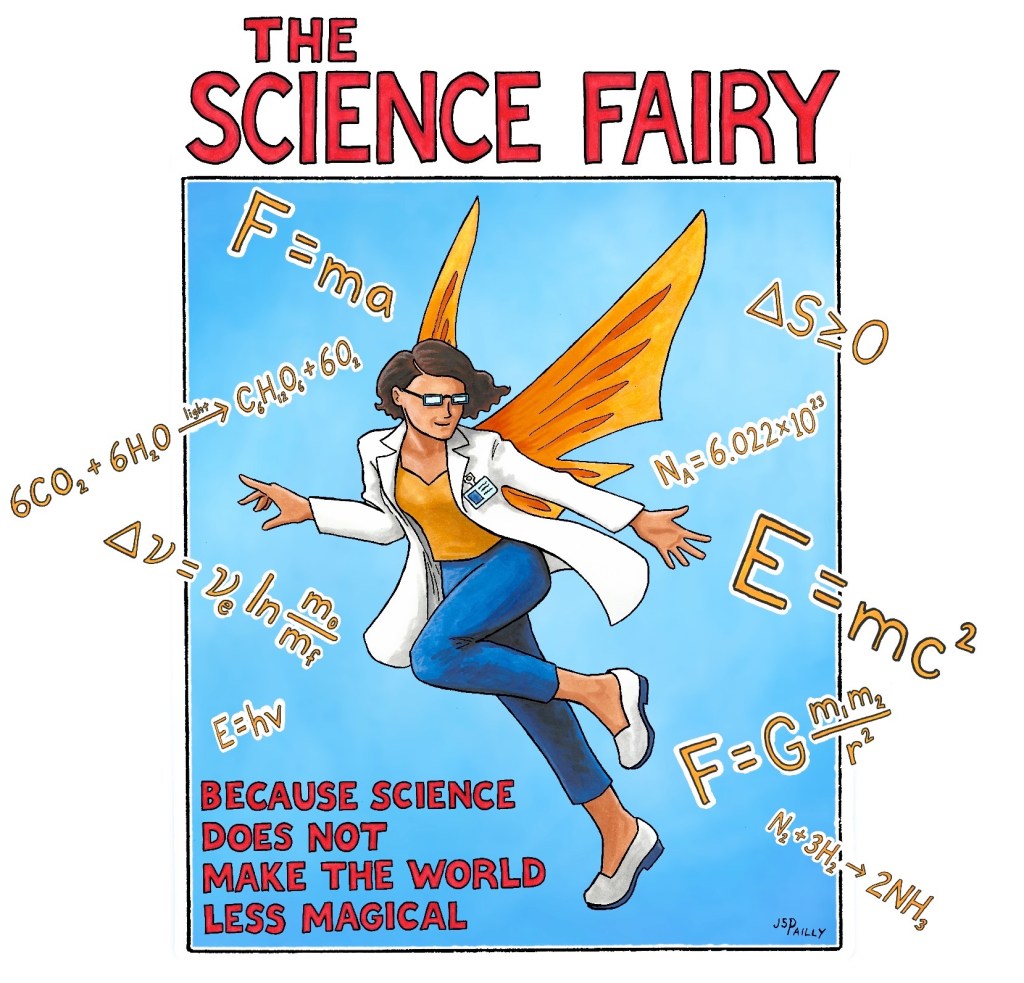
I was, and still am, utterly baffled by this point of view. It sounds like a celebration of ignorance to me. I mean, I do understand the joy of wonder. I wouldn’t want to lose the experience of wonderment either. But science does not diminish wonder. It enhances it.
Consider looking up at the night sky, noticing one slightly orange, non-twinkling point of light, and saying: “Gee, I wonder what that is.” Now consider looking up at that same orangey point of light and thinking: “That’s Mars. That’s a whole other world. In some ways, it’s eerily similar to our world, and in other ways it’s wildly and terrifyingly different. Long ago, that world was covered in water, and maybe also life. Then something went wrong. The whole planet dried up, and all that life (assuming it was ever there in the first place) most surely died out. I wonder what happened. I wonder if we’ll find fossils. I wonder if we could ever turn Mars into a living planet again.”
Who’s having the greater experience of wonder? Rather than spoil any magic or mystery, science has given me far bigger and far more interesting questions to wonder about. Science has enriched my life, and if you are the kind of person who enjoys (who genuinely enjoys) the experience of wonder, I promise you that learning even a little about science will enrich your life, too.
The art used in today’s post is my own original work. If you like my art, please consider visiting the I-Love-Space store on RedBubble. Shopping on RedBubble is a great way to support artists (like me) so that we can keep doing what we do. Thank you!

 i-love-space.com
I don’t understand that attitude either. I’d say to each their own, but if someone actively prevented me from talking about it, I’d probably leave, or at least find someone else at the party to talk with.
LikeLiked by 1 person
I was kind of stuck at the table, at least for a while. Also, I really wanted to understand her point of view.
I guess you could say I wasn’t content to say “Gee, I wonder what her problem is.” I wanted to learn. Though, admittedly, what she was saying still didn’t make much sense to me, no matter how hard I tried.
LikeLiked by 1 person
I can see that. I think I’d also want to say to someone like that that they need to upgrade their wonder, that holding on to the initial version is artificial and forced. Resolving it doesn’t kill all wonder, but leads to whole new levels of it.
For instance, learning about molecular biology doesn’t so much kill the wonder of the mystery of life, as upgrade it to an appreciation of the profound complexity of the dance that these vast networks of molecules perform, and how it might have evolved.
Admittedly, wonder is subjective. And often the real issue is comfort, which science doesn’t always provide. Although arguably it give us tools to eventually provide real comfort.
LikeLike
I keep this quote from Richard Feynman handy: “Poets say science takes away from the beauty of the stars – mere globs of gas atoms. I too can see the stars on a desert night, and feel them. But do I see less or more?
“It does not do harm to the mystery to know a little about it. For far more marvelous is the truth than any artists of the past imagined it.
“Why do the poets of the present not speak of it? What are poets who can speak of Jupiter if he were a man, but if he is an immense spinning sphere of methane and ammonia must be silent?”
This has inspired my own attempts at poetry.
LikeLiked by 1 person
I’ve heard that quote before. It’s a really good one. My attempts at poetry are too embarrassing to share, but I do try to find my own ways to express the beauty of science.
LikeLike